Sizing
What Size Dumpster Do I Need? An Atlanta Guide
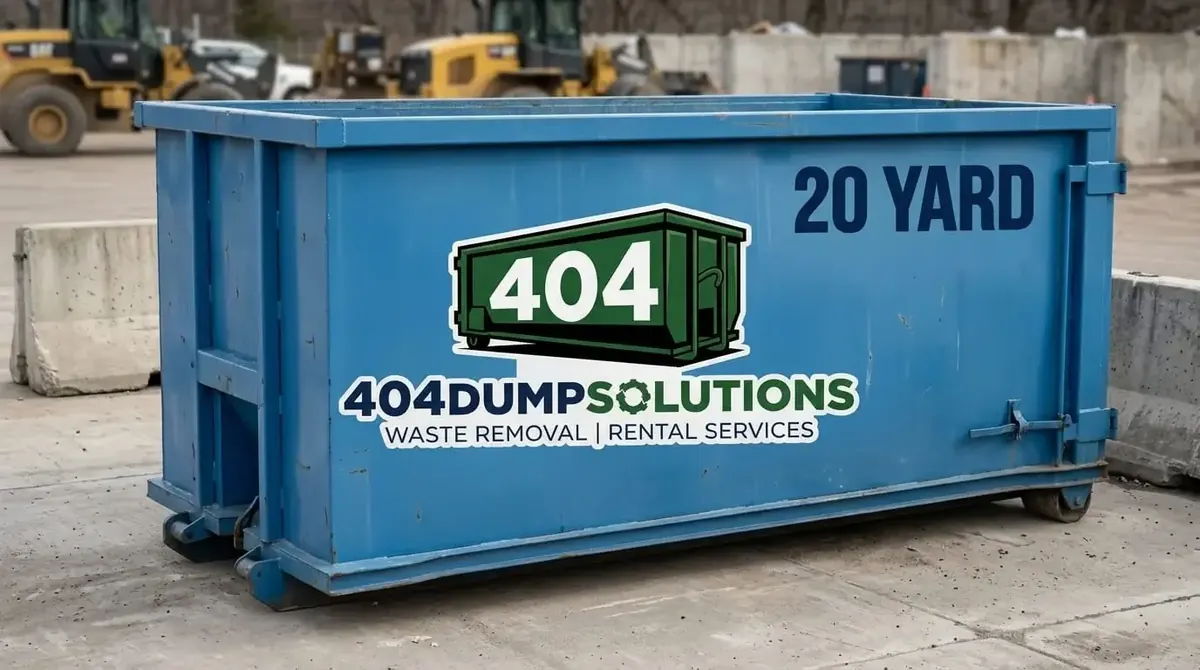
The 20 yard is the all-purpose pick. How to choose between 10, 15, 20, 30 and 40 yards by volume, weight and driveway space in metro Atlanta.
Read the guidePermits · 10 min read
Two questions decide whether a container can go where you want it: does the city, county or state allow it in that spot, and who is allowed to haul there? Here is what each official source says, as read in October 2026.
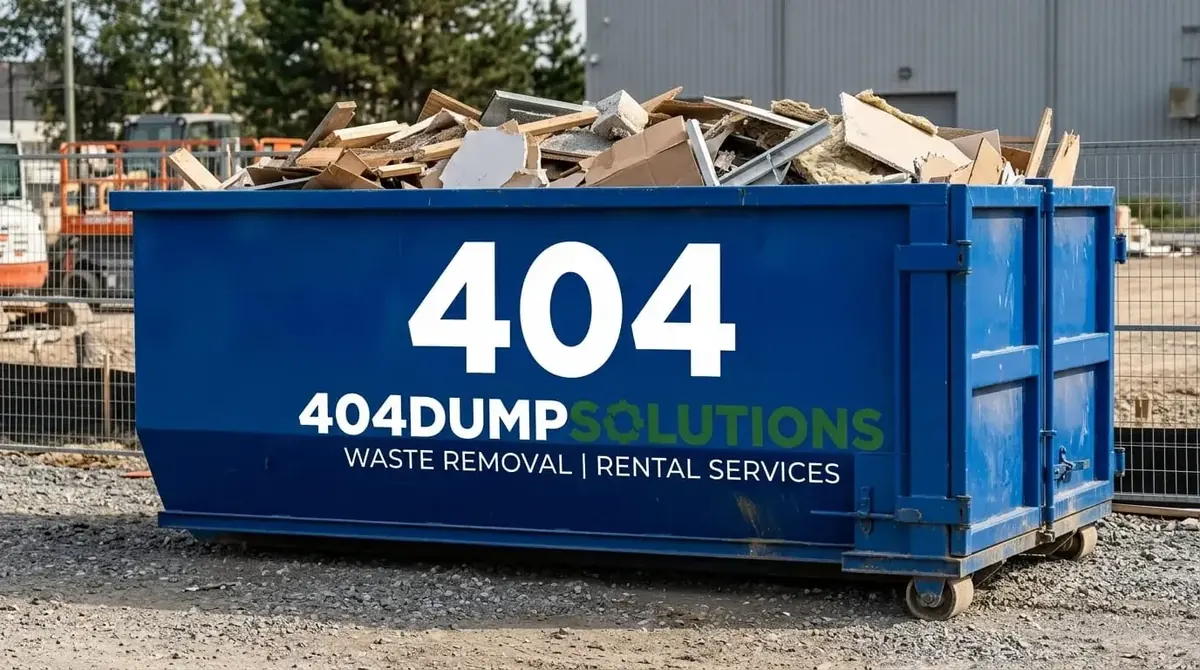
Driveway or private lot: we found no City of Atlanta permit for a roll-off on private property, and the City wants private property used first. College Park and Norcross put time limits on some private-property boxes. Atlanta street, sidewalk or right-of-way: an ATLDOT dumpster permit under Atlanta Code §138-61 — a $20.00 fixed fee plus $10.00 a calendar day for up to 100 linear feet, for no more than six months, with the City named on the insurance, the provider's name and phone number on the box, reflective sheeting on all four corners and set distances from bus stops, crosswalks, intersections and hydrants. State routes: we found no GDOT permit type for a dumpster. The other cities: each has its own rule, set out below. Who may haul: Atlanta requires a Public Works permit to collect waste, Georgia EPD treats roll-off collection as a permit-by-rule activity, and several cities run city-only, county-run or exclusive systems. We're licensed and insured.
Atlanta Code §138-61(b) says it is unlawful "to place or maintain a dumpster in the public right-of-way unless such person shall first obtain a dumpster permit from the department of transportation." A dumpster here means any container used for "the storage, collection, or removal of construction debris, demolition debris, or other discarded material" (§138-61(a)(1)). ATLDOT's Dumpster / POD permit page says a permit is needed for every dumpster, container or POD on the City's public right-of-way, and that applications can be made online.
The conditions, from the code: a permit lasts "not more than six months" (§138-61(d)(1)); no permit is issued unless the applicant shows the dumpster "cannot be accommodated on private property" (§138-61(d)(2)); the insurance certificate must name the City of Atlanta, its officers, employees and agents as additional insured, in an amount set by the City's risk manager (§138-61(d)(3)); and the applicant repairs any damage to the public way (§138-61(d)(4)). ATLDOT's page adds that the provider signs a Certification Compliance agreement, and the City's Right-of-Way Manual checklist (Appendix K) asks for a sketch showing barricades and reflectors and says "Reflectors and barricades will be provided by the applicant."
| Curb lane used | Fee (§138-61(e)) |
|---|---|
| Every permit | $20.00 fixed fee |
| Up to 100 linear feet | $10.00 per calendar day |
| 101 to 200 feet | $15.00 per calendar day |
| 201 to 300 feet | $20.00 per calendar day |
| Over 300 feet | $25.00 per calendar day |
Blocked parking meters and emergency no-parking signs may be added to the bill (§138-61(e)(6)).
The provider must show its name and telephone number "visibly displayed in a conspicuous manner" and put "high-intensity retro-reflective sheeting" on each of the four corners (§138-61(f)). The Right-of-Way Manual's compliance agreement (Appendix L) spells it out: at least a 6-inch-wide by 4-foot-long strip of reflective tape placed vertically on each corner, or four vertical panel barricades with flashing lights on the street side of the container. The box must sit immediately next to the property whose address is on the permit, be kept free of graffiti, and be covered with a tarpaulin or other cover while in transit (§138-61(h)).
Under §138-61(g), no dumpster is permitted within 40 feet of any bus stop, within 20 feet of an accessible parking space or a pedestrian crosswalk, within 30 feet of any intersection or within 15 feet of a fire hydrant — and not on any sidewalk unless an alternative location is not feasible. Each day a violation continues is a separate offense (§138-61(i)(4)), and the penalties include permit revocation, "A fine not exceeding $1,000.00 a day", or up to six months' imprisonment (§138-61(j)). We found no fixed overnight or hours limit beyond the six-month cap.
Some Atlanta-area streets are state routes, not City or county streets. GDOT's Regulations for Driveway and Encroachment Control say a permit is required before any construction work or non-routine maintenance within the State Highway right-of-way, and list examples such as grading, landscaping, drainage and development. We found no GDOT permit type for placing a dumpster or roll-off on state right-of-way in any chapter, and GDOT's manual treats structures on state right-of-way as obstructions it can order removed (Ch. 9).
So on a state route, the driveway or the lot is the answer. If you are not sure whether your street belongs to the City, the county or the state, give us the address and our team can help explain the process before delivery day.
Our yard at 4445 Wendell Dr SW has an Atlanta mailing address, but the US Census geocoder and Fulton County's own city-limits map put it in unincorporated Fulton County — the Fulton Industrial District — just outside Atlanta city limits. The City of Atlanta rules above apply to jobs inside Atlanta city limits, not to the yard's own district.
In unincorporated Fulton, Fulton County Code §70-84(c) says no person may collect or dispose of solid waste for a fee "without first obtaining all required permits and registering with the Fulton County Department of Public Works", and §70-86(b) lists what registration takes, including an EPD permit, a Board of Health permit, insurance and a bond. We found no Fulton County right-of-way permit for dumpsters (its Chapter 62 permits cover utility and excavation work) and no county rule for a roll-off on a residential lot.
Sandy Springs is the strictest on placement: "All containers shall not be on public rights-of-way" (§46-24(6)), containers must show the company name and phone number in letters at least 1½ inches high (§46-24(5)), and collection runs no earlier than 7:00 a.m. and no later than 7:00 p.m., Monday to Saturday (§46-22(c)(1)). Roswell says commercial containers may not be left on any street or sidewalk except as authorized by the environmental/public works director (§24.3.3), and §18.2.1(a) bars placing any object in the street or sidewalk that would impede or endanger traffic unless permitted. Marietta prohibits a bulk container on city rights-of-way "unless a permit is granted by the public works director" (§5-8-040(A)(2)).
In Alpharetta, the City's right-of-way page covers only excavation, and we found no dumpster-in-street rule. In Smyrna, the code's placement rule covers garbage cans only (§86-31.1), and we found none for dumpsters. In Johns Creek and Kennesaw we found no dumpster-specific street rule. Where no rule is found, keep the box on the driveway or the lot, or check with the City first.
Brookhaven has the clearest street rule: "Dumpsters or any onsite waste disposal equipment may not be located on the street" unless the director approves it with traffic controls, and only on streets with a paved width greater than 24 feet (§7-196(b)). The City's right-of-way page says an approved Dumpster Permit lets residents place a dumpster on a city street for a maximum of 30 days, applied for through its Right-of-Way Permitting System. Decatur says no obstruction may be placed on any sidewalk for more than 30 minutes (§86-4); the City's right-of-way permit form could not be read. In Tucker and Dunwoody we found no dumpster street rule — Dunwoody's code has no solid waste chapter at all.
College Park added a rule in June 2026: roll-off containers used for construction, demolition, emergency cleanup or temporary projects may remain on site without a permanent enclosure for no more than 30 days unless extended by the building official (§8-202(c)). Norcross lets an owner use a roll-off to clean out a building or property for a maximum of four weeks in a calendar year when the project is not tied to an active building or construction permit (§36-207(b)). Duluth says containers, when stored, "shall not be on public rights-of-way" (§13-20(5)), and Lawrenceville says commercial containers may not be left on any street, sidewalk or other public place except as authorized by the City Manager (§30-28). In East Point we found no dumpster street rule — but read the hauling rules below first.
Georgia: collection, roll-off and dumpster operations included, is a permit-by-rule activity; EPD must be notified within 30 days of starting, and collectors must comply with local rules and deliver only to permitted facilities (EPD Rule 391-3-4-.06(2), (3)(a)5 and 7). Atlanta: collecting or transporting commercial, industrial and non-residential solid waste takes a permit from the Public Works commissioner (§130-52(a)), and so does collecting residential waste generated by another person (§130-51(a)); §130-52(d) lets every private contractor serve any customer who asks, and we found no exclusive City franchise. Open with a city permit, contract or registration: Sandy Springs (non-exclusive city contract and a 5% infrastructure maintenance fee, §46-20, §46-26), Marietta (annual non-exclusive Public Works permit, §5-10-060, §5-10-070; single- and two-family garbage is city-only, §5-8-050(B)), Alpharetta (solid waste collection permit, §38-34, §38-35), Johns Creek (registration and a city contract, §42-21(d), §42-23(a)), Smyrna (a mayor-and-council permit, §86-56), College Park (a $200 non-exclusive permit for waste the city does not collect, §10-110.1(b)), and Duluth and Lawrenceville (construction and demolition haulers register with the City Clerk, §13-26, §30-40).
Eight cities run city-only, county-run or exclusive systems. Norcross has an exclusive franchise with Waste Management that covers roll-offs: "No other person shall collect, convey over any of the streets or alleys of the city, or dispose of any refuse accumulated in the city" (§36-204(b)), and for commercial roll-off service refuse includes construction debris (§36-202). East Point makes owners "engage the services of the City of East Point" to remove construction and demolition debris (§7-2005(a)), with one exclusive commercial company (§7-2011). Brookhaven, Tucker and Dunwoody are served by DeKalb County sanitation; DeKalb says commercial establishments in cities operating under an IGA with the county must use county service, and "Private haulers are not permitted", while the Brookhaven and Tucker codes require a city or county licence to haul (Brookhaven §22-3(b), Tucker §36-3(b)). Decatur services all areas itself; private haulers need city approval, written authorization and a red city decal on each container (§82-38(b), §82-39). Roswell collects household and commercial garbage itself (§24.2.2, §24.3.1) but does not collect construction debris. Kennesaw's sanitation page says private haulers are not permitted inside city limits, while its code leaves construction waste to owners and contractors (§74-31). In those eight, we check the City's rules before booking a container inside city limits. 404 Dump Solutions is licensed and insured.
Tell us the address and where you want the box. A driveway is the simplest case almost everywhere we serve. An Atlanta street spot takes an ATLDOT dumpster permit, insurance naming the City, reflectors and the right distances, so give yourself extra lead time. A state route means the driveway. In Sandy Springs the box stays off the right-of-way; in Brookhaven a street permit lasts 30 days at most and needs a street wider than 24 feet; in College Park and Norcross, watch the time limits. If your neighborhood has an HOA, check its rules on how long a container can sit in the driveway. Call (470) 407-6185, 24 hours a day, 7 days a week.
Talk to a real person
Call (470) 407-6185 with the address and what is going in. A flat price and a delivery window before you hang up.
Open 24 hours, 7 days
From this guide
We found no City of Atlanta permit rule for a roll-off on private property, and the City only issues a street permit when the dumpster cannot fit on private property. Your HOA may still have rules, so check them.
Atlanta Code §138-61(e) sets a $20.00 fixed fee plus $10.00 a calendar day for up to 100 linear feet of curb lane, rising to $15, $20 and $25 a day for longer stretches. A permit lasts no more than six months, and blocked meters or no-parking signs can be added.
We found no GDOT permit type for placing a dumpster or roll-off on state right-of-way, and GDOT treats structures there as obstructions it can order removed. Keep it on the driveway or the lot.
It depends where. Atlanta requires a Public Works permit to collect waste (§130-51, §130-52), Georgia EPD treats roll-off collection as permit-by-rule, and several cities require their own permit, contract or registration. Norcross, East Point, Decatur, Roswell, Kennesaw, Brookhaven, Tucker and Dunwoody run city-only, county-run or exclusive systems. We are licensed and insured, and we check local rules before we book.
Keep reading
The rest of the series, same approach — official sources, no filler.
Sizing
The 20 yard is the all-purpose pick. How to choose between 10, 15, 20, 30 and 40 yards by volume, weight and driveway space in metro Atlanta.
Read the guideCost
Atlanta dumpster rentals generally run about $350 to $750. What is inside that number, what moves it, and the fees the City actually publishes.
Read the guideGuide
Everything in one place: how a roll-off rental works in Atlanta, sizes and weights, what the City collects, permits, hauling rules and where loads go.
Read the guide