Permits
Dumpster Permits in Atlanta and Metro Atlanta, GA
No City rule found for a driveway roll-off; an ATLDOT permit for Atlanta streets; no GDOT path on state routes. City by city across metro Atlanta.
Read the guideSizing · 7 min read
Rent a container that is too small and you may need a second haul. Choose one that is too big and you pay for space you never fill. Here is how we match the size to the job when you call.
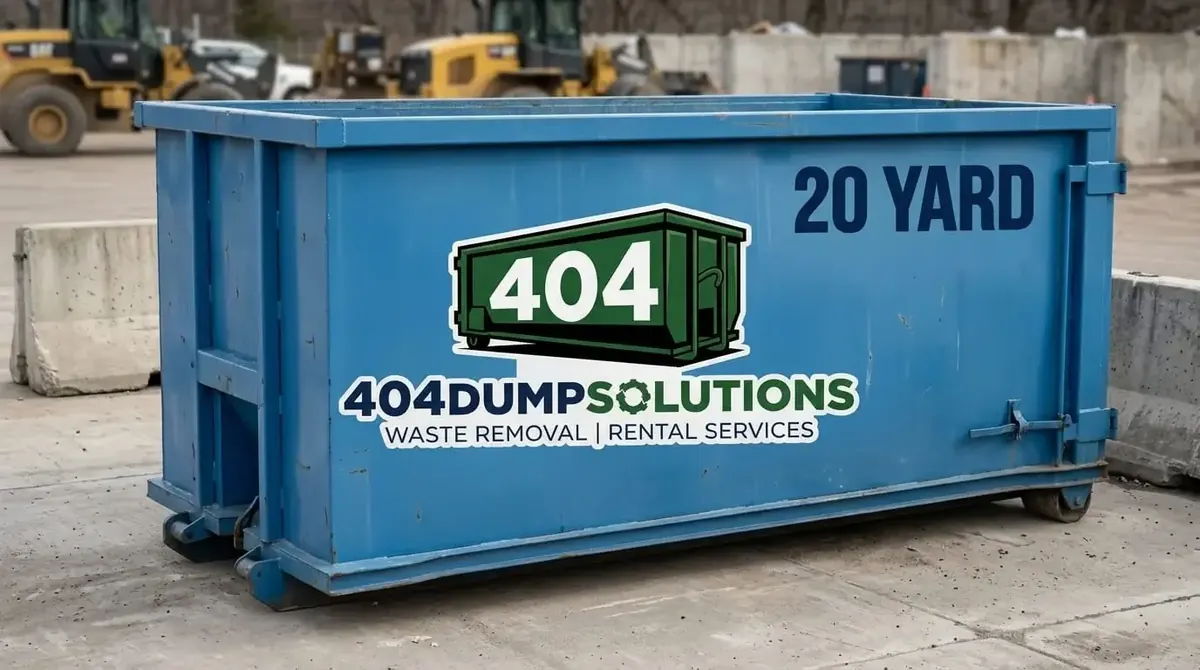
For most home projects in Atlanta, the 20 yard dumpster is the place to start. It is one of our most requested sizes and the closest thing to an all-purpose box: kitchen and bathroom renovations, whole-home cleanouts, roofing, landscaping debris and moving cleanups. Go 10 yard for small bathroom or kitchen remodels, roofing tear-offs, concrete and tile, or a garage cleanout where driveway space is tight. Go 15 yard for garage and attic cleanouts, flooring and carpet removal, fence or deck removal and yard waste. Go 30 yard for multi-room renovations, estate cleanouts, office remodels and large demolition debris, and 40 yard for commercial construction, full-scale demolition and warehouse cleanouts. Not sure? Call (470) 407-6185 and we size it for you.
Two rules of thumb from the jobs we see. A single-room cleanout fills about 10 yards, while a full kitchen or bath remodel usually lands in the 15–20 yard range. Heavy material — concrete, dirt, brick, asphalt and gravel — should typically only go in a 10 or 15 yard because of transportation weight limits, and for a roof our 10 and 20 yard boxes are the usual picks. When a job sits between two sizes and the debris is light and bulky, the larger one is typically the safer bet: the step up usually costs less than a second dumpster. When it is heavy, smaller is the safe side.
All five are open-top roll-offs about 7.5 feet wide. The 10 and 15 are shorter boxes; the 20, 30 and 40 share a footprint of about 22 feet and simply get taller. Pickup loads and trash bags are a rough guide to volume. The weight column is the allowance most rentals include, which depends on the debris type and disposal requirements.
| Size | Approx. L × W × H | Holds about | Typical weight allowance | Typical job |
|---|---|---|---|---|
| 10 yard | 14' × 7.5' × 3.5' | 3 pickup loads (50–70 bags) | 1–2 tons | Small remodels, roofing tear-offs, concrete and tile |
| 15 yard | 16' × 7.5' × 4.5' | 4–5 pickup loads (80–100 bags) | 2–3 tons | Garage cleanouts, flooring, landscaping |
| 20 yard | 22' × 7.5' × 4.5' | 6 pickup loads (110–130 bags) | 3–4 tons | Renovations, roofing, whole-home cleanouts |
| 30 yard | 22' × 7.5' × 6' | 9 pickup loads (170–190 bags) | 4–5 tons | Large remodels, estate cleanouts, demolition debris |
| 40 yard | 22' × 7.5' × 8' | 12 pickup loads (230–250 bags) | 5–6 tons | Commercial construction and demolition |
Most people under-count the pile. Walk the house or the job before you call — count rooms, pickup loads or the square footage of flooring or roofing coming up — and tell us what the material is. Estimating the debris is most of the decision, and our team helps customers choose the right size the first time.
Volume and weight are two separate limits. Furniture and household junk are bulky and light; concrete, dirt, brick, asphalt, tile and roofing shingles reach the weight line long before the box looks full, and wet yard waste is heavier than it looks. Each dumpster includes a standard weight allowance based on its size and the debris type. If it goes over, overage charges may apply based on the disposal facility's weight measurements, and heavy material may need separate handling or special pricing. Tell us what is going in and we will match the size to the weight.
There is a disposal reason to sort, too. Georgia's rules define construction and demolition waste as building materials and rubble from construction, remodeling, repair and demolition — wood, bricks, metal, concrete, wall board, paper and cardboard among them (EPD Rule 391-3-4-.01(19)). An inert waste landfill takes only earth and earth-like products, concrete, cured asphalt, rock, bricks, yard trimmings and land-clearing debris such as stumps, limbs and leaves (Rule .06(3)(c)1), and asphalt roofing shingles may only go to a construction and demolition or municipal solid waste landfill (Rule .04(4)(d)). So a clean load of concrete and brick, a remodel load and a household cleanout load are three different loads at the gate. And mind the height: debris must stay level with or below the top rim. Overfilled dumpsters cannot legally or safely be transported.
Check the length first: about 14 feet for a 10 yard, about 16 for a 15, and about 22 feet for the 20, 30 and 40 — most roll-offs need approximately 20 to 22 feet of placement length. All are about 7.5 feet wide. Allow approximately 60 feet of access for the truck and at least 25 feet of overhead clearance free from power lines and tree limbs, pick a flat, stable surface, and move vehicles, trailers and equipment before the driver arrives. If you will not be there, mark the spot with cones or tape. Many customers put plywood boards beneath the wheels for extra protection, especially on decorative or newer driveways. The 10 yard is the one for a tight driveway.
Keep it on private property where you can. We found no City of Atlanta permit rule for a roll-off on your own driveway, and the City's street permit is only issued when the dumpster "cannot be accommodated on private property" (Atlanta Code §138-61(d)(2)). A few cities limit even private-property boxes: in College Park, roll-offs for construction, demolition or temporary projects may stay on site without a permanent enclosure for up to 30 days unless the building official extends it (§8-202(c)), and in Norcross a cleanout roll-off not tied to an active building permit is limited to four weeks in a calendar year (§36-207(b)). On a state route, we found no GDOT permit type for a dumpster at all. The permit guide covers every city we list.
The City of Atlanta's bulk pickup takes only a little building material: up to four cubic yards generated by the resident in maintaining the home, and not roofing shingles, brick, plaster or concrete (Atlanta Code §130-40(c)(2)). Public Works is not allowed to collect any material generated by contractors (§130-40(c)(4)), and §130-45(b) keeps construction and demolition debris out of curbside collection except for a small owner project that fits in a 96-gallon garbage cart without sticking out of the top. Contractors must remove the waste their work creates (§130-3(d)).
The cities around Atlanta work the same way. Marietta says construction and demolition waste "shall be removed by the owner, lessee, or tenant of the property or the contractor" (§5-8-060(A)), and Kennesaw's code uses the same words (§74-31(a)). Smyrna says construction or remodeling waste is disposed of at the owner's expense (§86-2(d)), Decatur's sanitation crews do not collect trash from work done by building contractors (§82-34(g)), College Park's city forces do not handle building materials (§10-114), and Roswell's sanitation page says the City does not collect construction debris. A roll-off is for the pile that is bigger, heavier or sooner than any of that allows.
Describe the job on the phone — the materials, the scope and the timeline — and we recommend the size that fits. If the project grows, we can often arrange a swap-out quickly.
Talk to a real person
Call (470) 407-6185 with the address and what is going in. A flat price and a delivery window before you hang up.
Open 24 hours, 7 days
From this guide
A 10 yard handles a small kitchen or bathroom remodel, and a full kitchen or bath remodel usually lands in the 15 to 20 yard range. Once the work spreads to several rooms, a 20 or a 30 is the usual call.
Our 10 and 20 yard dumpsters are the ones most commonly used for roofing shingles, underlayment and flashing. Shingles are heavy, so the weight usually decides it. Tell us the approximate size of the roof and we will recommend the box.
A 10 or 15 yard handles a typical garage or attic cleanout. Our 15 and 20 yard boxes work well for tree trimming, landscaping waste, brush and yard cleanup. A whole-home cleanout is usually a 20 or a 30.
Usually. It is about 22 feet long and 7.5 feet wide, so plan on that length plus about 60 feet of access for the truck and 25 feet of overhead clearance. We found no City of Atlanta permit rule for a roll-off on your own driveway, but check your HOA.
Keep reading
The rest of the series, same approach — official sources, no filler.
Permits
No City rule found for a driveway roll-off; an ATLDOT permit for Atlanta streets; no GDOT path on state routes. City by city across metro Atlanta.
Read the guideCost
Atlanta dumpster rentals generally run about $350 to $750. What is inside that number, what moves it, and the fees the City actually publishes.
Read the guideGuide
Everything in one place: how a roll-off rental works in Atlanta, sizes and weights, what the City collects, permits, hauling rules and where loads go.
Read the guide