Sizing
What Size Dumpster Do I Need? An Atlanta Guide
The 20 yard is the all-purpose pick. How to choose between 10, 15, 20, 30 and 40 yards by volume, weight and driveway space in metro Atlanta.
Read the guideGuide · 9 min read
If you have never rented a dumpster, this is the page to read first. It covers the whole process from the phone call to the pickup, with the Atlanta, Fulton County and Georgia specifics that national guides leave out.
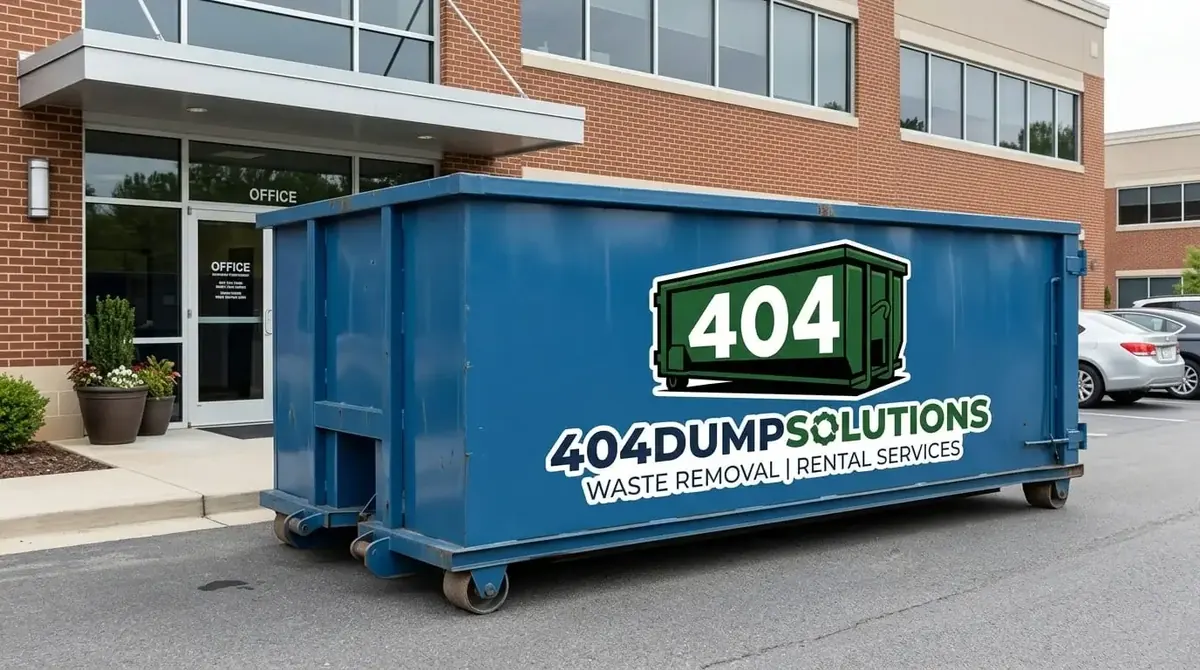
Whether you are remodeling a kitchen, clearing out a garage, running a construction job or cleaning up after a storm, a roll-off puts all the debris in one place instead of trip after trip to a disposal facility. The payoff is a cleaner, safer property, fewer disposal runs and one flat-rate cleanup instead of a pile of small bills. Remodels in particular make more debris than people expect — drywall, cabinets, flooring and fixtures do not fit in a garbage cart — and roof tear-offs, estate cleanouts, landscaping and demolition all fill a box quicker than a trailer.
You call, tell us about the job and the address, and choose a size with our help. You get a flat-rate quote that may include delivery, pickup, disposal and a standard rental period — most rentals include 7 days. We schedule delivery to your driveway, job site, parking area or commercial property — often same-day or next-day, depending on availability. You fill it with approved debris, keeping it level with or below the top rim, and when you are finished you call us and we schedule pickup promptly. You do not need to be home for delivery or pickup, as long as we have clear placement instructions and the area is clear of vehicles and obstacles.
Our yard is at 4445 Wendell Dr SW, in the Fulton Industrial District. It has an Atlanta mailing address, but the US Census geocoder and Fulton County's city-limits map put it in unincorporated Fulton County, just outside Atlanta city limits. Atlanta itself had 498,715 people at the 2020 Census and reaches into DeKalb County as well as Fulton; Fulton County had 1,066,710.
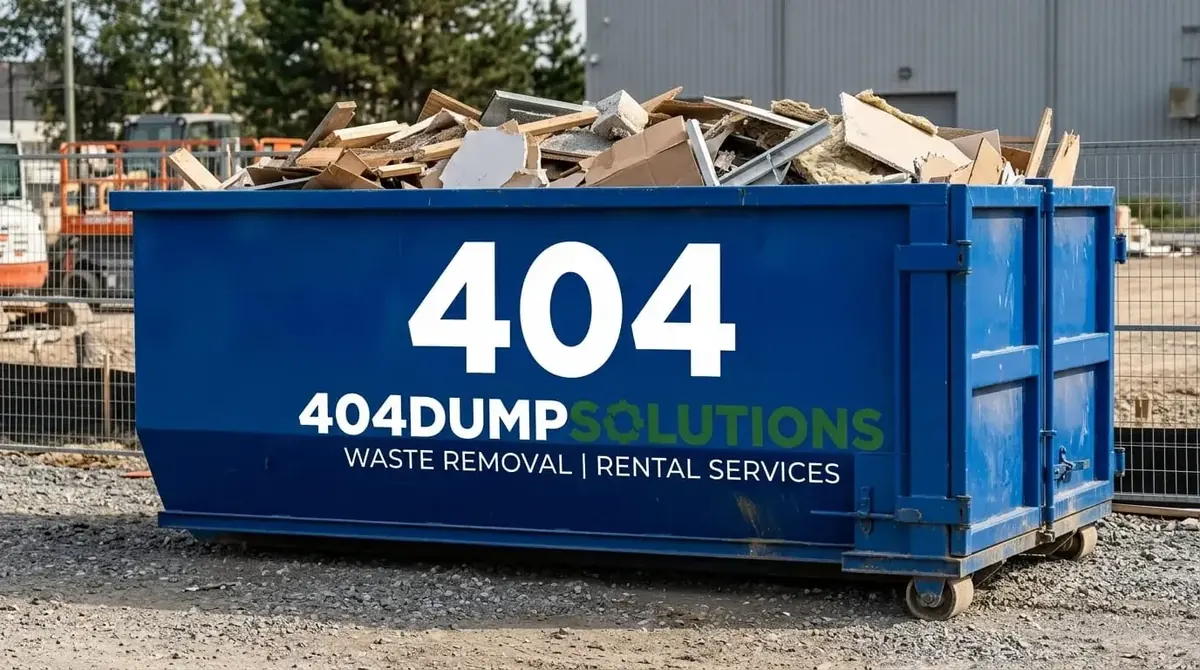
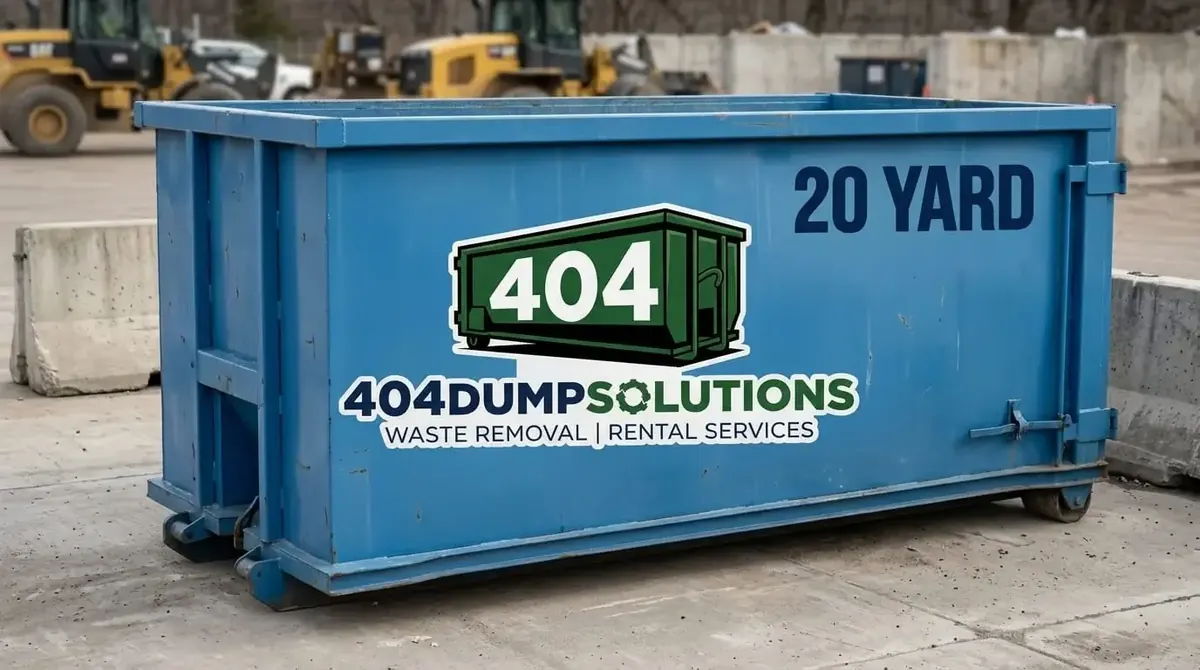
Start with the job, then check the weight. A 10 yard, about 14 feet long, suits small remodels, roofing tear-offs and heavy material such as concrete and tile. A 15, about 16 feet, suits garage cleanouts, flooring and landscaping. The 20, 30 and 40 share a footprint of about 22 feet and get taller: the 20 for renovations, roofing and whole-home cleanouts — the all-purpose pick; the 30 for large remodels, estate cleanouts and demolition debris; the 40 for commercial construction and demolition. All are about 7.5 feet wide. Most rentals include approximately 1–2 tons on a 10 up to 5–6 tons on a 40, depending on the debris. The sizing guide has the full table.
The City of Atlanta's bulk service is built for household junk. Up to eight cubic yards of junk or tree waste may go to the curb (Atlanta Code §130-40(c)(1)), but building material is capped at four cubic yards generated by the resident in maintaining the home — not roofing shingles, brick, plaster or concrete (§130-40(c)(2)). Public Works may not collect material generated by contractors, and "It is the responsibility of the contractor to remove all debris" (§130-40(c)(4)). The City makes no bulk collection where the material comes from a lot cleared for building or from repairs or rebuilding that include construction and demolition waste (§130-40(a)), and construction debris stays out of curbside collection unless a small owner project fits in a 96-gallon cart (§130-45(b)). Bulk collections must be scheduled, and since February 2026 they run on the resident's regular weekly collection day.
Some items need their own route. The City has no household hazardous waste collection program and points residents to CHaRM, the Center for Hard-to-Recycle Materials at 1110 Hill St SE, by appointment only (404-600-6386). Liquid paint does not go in the garbage can, and latex paint must be solidified first. That is why a roll-off is the normal answer for a remodel, a roof, a move-out or a construction site in Atlanta.
On your own driveway we found no City permit, setback or time-limit rule for a roll-off — and the City wants private property used first, because a street permit is only issued when the dumpster "cannot be accommodated on private property" (§138-61(d)(2)). On a City street, sidewalk or right-of-way, §138-61 requires an ATLDOT dumpster permit: a $20.00 fixed fee plus $10.00 a calendar day for up to 100 linear feet, for no more than six months, with insurance naming the City, the provider's name and phone number on the box, reflective sheeting on all four corners, and no placement within 40 feet of a bus stop, 30 feet of an intersection, 20 feet of a crosswalk or accessible parking space, or 15 feet of a hydrant. Without one, the fine can reach $1,000 a day (§138-61(j)). On a state route we found no GDOT permit path for a dumpster. The container needs a flat, stable surface, and plywood under the wheels helps protect newer driveways. The permit guide covers the other cities too.
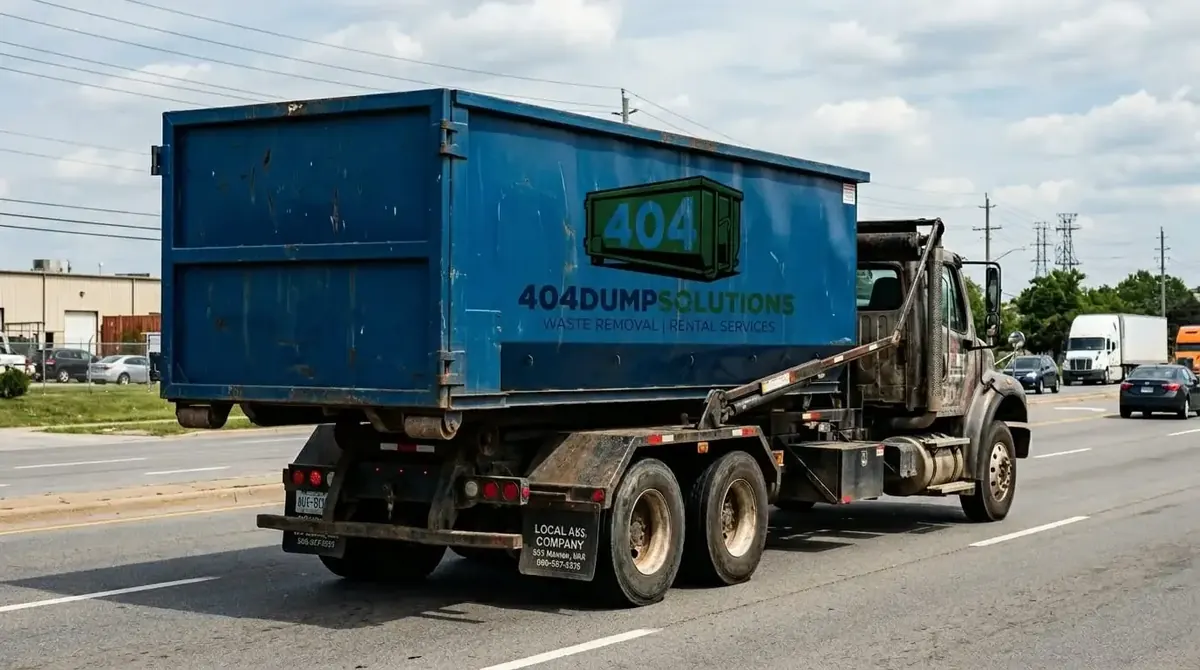
Atlanta Code §130-52(a) says no one may collect or transport commercial, industrial and non-residential solid waste "without having applied for permission therefor and received a permit from the commissioner," and §130-51(a) requires a permit to collect single-family residential waste generated by another person. The same section sets the working rules: collection vehicles may not stand unattended on a street, dumpsters must be covered, leak-resistant and in good repair, and non-residential collection vehicles carry the business name and vehicle number on both sides (§130-52(b)). Under §130-52(d), "Every private contractor may provide collection services to any customer who requests the services of the private contractor", and we found no exclusive City franchise.
Georgia adds a state layer: collection, roll-off and dumpster operations included, is a permit-by-rule activity, with EPD notified within 30 days of starting (Rule 391-3-4-.06(2)), and a property owner is responsible for getting solid waste to a compliant facility unless they have arranged service with a compliant collector (Rule .04(5)). Outside the City, each city sets its own hauling rules, and some are city-only or exclusive — see the permit guide. We're licensed and insured.
Georgia EPD runs the federal asbestos rules (NESHAP), which require a notification for all regulated demolition projects, "whether or not asbestos is present." EPD uses a ten-working-day (Monday to Friday) notice period, with notices filed on EPD forms through GEOS, and any project involving 10 or more continuous linear feet or 10 or more square feet of asbestos-containing material needs a project notification and fees. All regulated asbestos-containing material must be abated from the building before demolition. EPD's Duty Officer is at 404-363-7026.
Most homes are outside the demolition notice: legal owners of residences with four or fewer dwelling units are exempt unless the work is part of a larger project. Disposal is the hard line either way: asbestos-containing waste may go only to a landfill or facility authorized by EPD to accept it, sealed in labeled leak-proof containers (Rule .04(8)(b)), so asbestos never goes in our roll-offs. The what-goes-in guide has the detail.
Georgia EPD Rule 391-3-4-.06(3)(a)7 says all collected solid waste must be deposited only in a permitted facility authorized to receive that waste type, and Rule .06(3)(a)3 says loads must be moved so the contents "will not fall, leak or spill" and covered when needed to keep material from blowing off; in Atlanta, a dumpster on the road must also be tarped in transit (§138-61(h)(3)). Construction and demolition landfills take building debris and may also take inert waste and yard trimmings (Rule .01(20)); inert landfills take only clean earth, concrete, cured asphalt, rock, brick and land-clearing debris (Rule .06(3)(c)1). We found no current City of Atlanta landfill or transfer station on any official page.
Whenever possible, we work with local Atlanta-area recycling and disposal facilities so materials such as metal, concrete, asphalt, cardboard, yard waste and wood debris can be recycled, depending on local processing availability.
The rules change once you leave Atlanta. Some cities are open to roll-off haulers with a city permit, contract or registration: Sandy Springs (pop. 108,080), Marietta (60,972), Alpharetta (65,818), Johns Creek (82,453), Smyrna (55,663), College Park (13,930), Duluth (31,873) and Lawrenceville (30,629). Others run city-only, county-run or exclusive systems: Norcross (exclusive franchise covering roll-offs), East Point (owners use the City for construction debris), Decatur (city approval and decal), Roswell (city garbage service), Kennesaw (the City's page says no private haulers), and Brookhaven, Tucker and Dunwoody (DeKalb County sanitation). In those, we check the City's rules before booking a container inside city limits. Each place has its own page — see the service area.
In: wood, drywall and flooring, furniture and household junk, yard waste and branches, roofing shingles, small non-hazardous appliances, remodeling debris, cardboard, and concrete, dirt and brick in a weight-limited 10 or 15. Out, by Georgia rule at every disposal facility in the state: lead-acid batteries, liquid waste and hazardous waste (EPD Rule 391-3-4-.04(6)(b)); whole tires have been banned from landfills since 1994. Out of our boxes as well: paints and solvents, oils and fuels, tires, propane tanks and gas cylinders, medical waste, asbestos-containing materials and refrigerated appliances containing Freon. The full guide says what to do with each instead.
Spread the weight evenly rather than loading everything on one end, break long boards and bulky pieces down, and keep everything level with or below the top rim — overfilled dumpsters cannot legally or safely be transported. Keep the path clear for pickup. Need more time? Call before the scheduled pickup and we can often extend for an additional daily or weekly rate, or swap a full box for an empty one.
To book, call (470) 407-6185, 24 hours a day, 7 days a week. Have the address, the material and a rough quantity ready, and call before noon for the best chance of same-day delivery. We accept most major credit and debit cards, and payment is generally collected when the booking is confirmed.
Talk to a real person
Call (470) 407-6185 with the address and what is going in. A flat price and a delivery window before you hang up.
Open 24 hours, 7 days
From this guide
Most rentals include a standard 7-day rental period. If you need more time, call before the scheduled pickup and we can often extend for an additional daily or weekly rate. Finish early and we arrange an earlier pickup.
Only a little from your own home maintenance: up to 4 cubic yards of building material through bulk pickup, never shingles, brick, plaster or concrete (§130-40(c)(2)). Public Works may not collect material generated by contractors, and the contractor must remove it.
No. As long as we have clear placement instructions and the delivery area is clear of vehicles and obstacles, you do not need to be there for delivery or pickup.
We cover metro Atlanta, with each city's rules on its own page. In Norcross, East Point, Decatur, Roswell, Kennesaw, Brookhaven, Tucker and Dunwoody, which run city-only, county-run or exclusive systems, we check the City's rules before booking.
Keep reading
The rest of the series, same approach — official sources, no filler.
Sizing
The 20 yard is the all-purpose pick. How to choose between 10, 15, 20, 30 and 40 yards by volume, weight and driveway space in metro Atlanta.
Read the guidePermits
No City rule found for a driveway roll-off; an ATLDOT permit for Atlanta streets; no GDOT path on state routes. City by city across metro Atlanta.
Read the guideCost
Atlanta dumpster rentals generally run about $350 to $750. What is inside that number, what moves it, and the fees the City actually publishes.
Read the guide