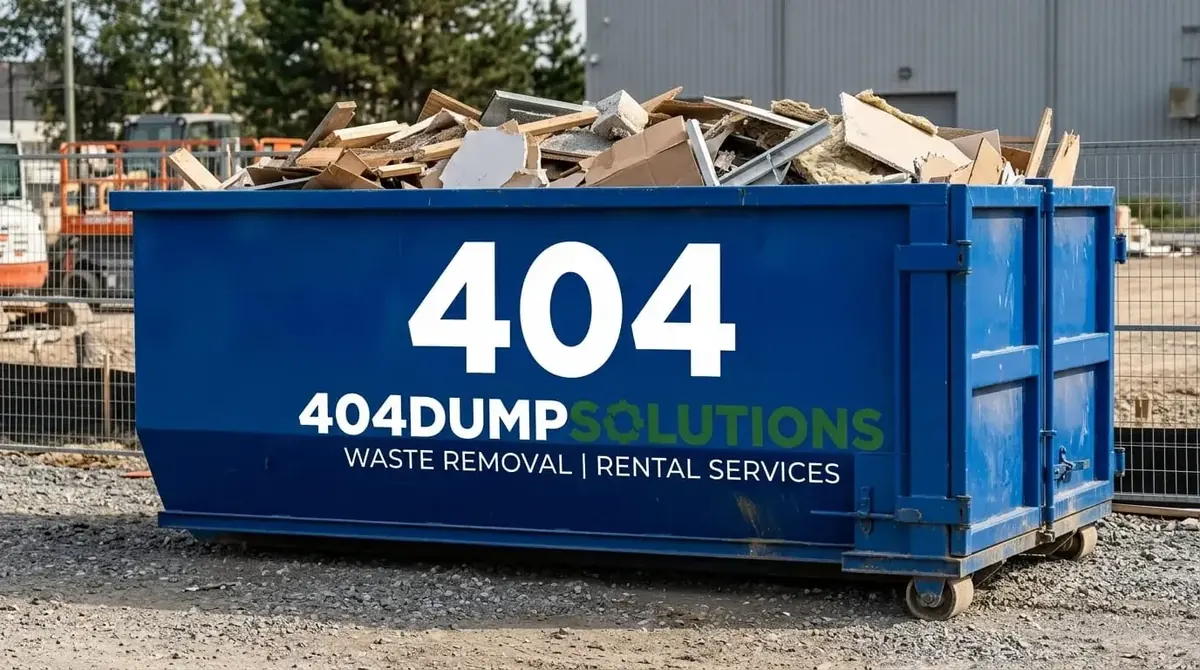
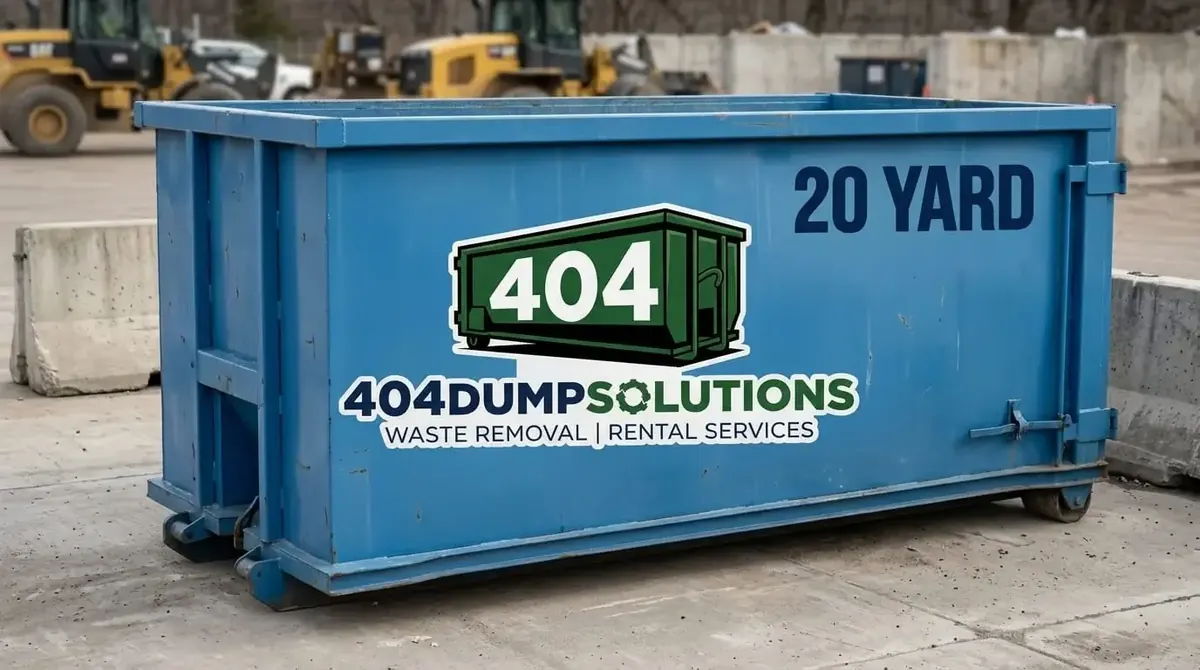
Sizing
What Size Dumpster Do I Need? An Atlanta Guide
The 20 yard is the all-purpose pick. How to choose between 10, 15, 20, 30 and 40 yards by volume, weight and driveway space in metro Atlanta.
Read the guideGuidelines · 8 min read
Most of what comes out of a house or a job site can go in a roll-off. The exceptions are the things Georgia keeps out of every landfill or that only certain facilities may take — and each of them has somewhere else to go.
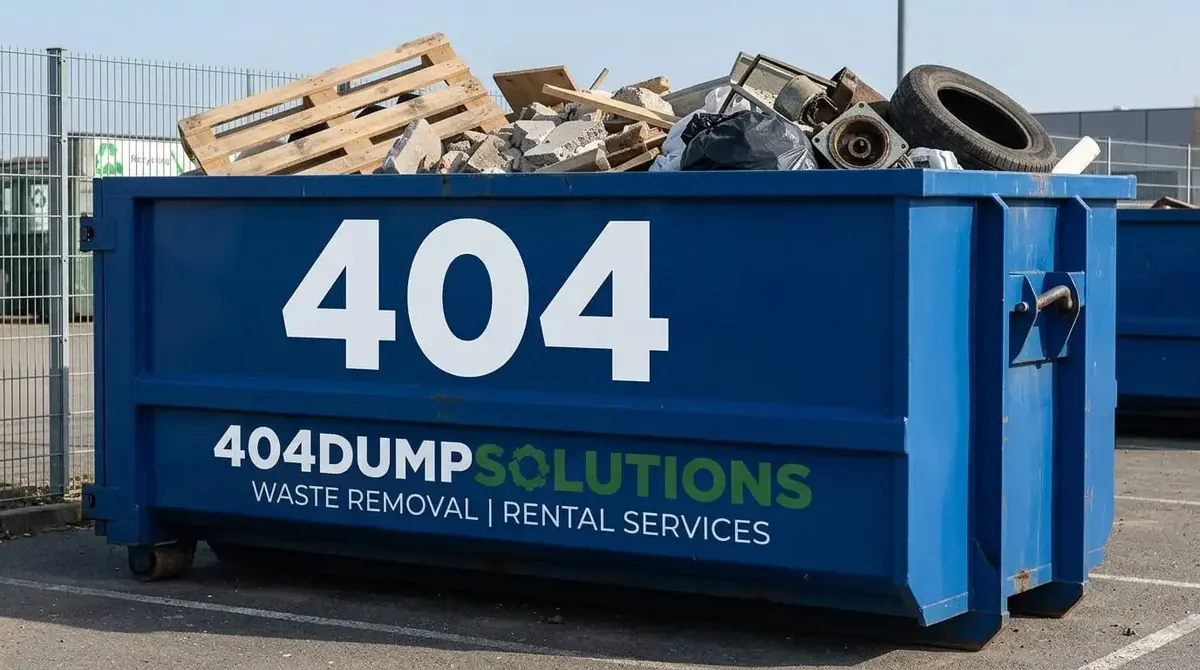
That list lines up with Georgia's own definitions. EPD Rule 391-3-4-.01(19) defines construction and demolition waste as "waste building materials and rubble resulting from construction, remodeling, repair, and demolition operations", including wood, bricks, metal, concrete, wall board, paper and cardboard. A construction and demolition landfill "also may receive inert waste and yard trimmings" (Rule .01(20)). Yard trimmings means "leaves, brush, grass, clippings, shrub and tree prunings, discarded Christmas trees" and other landscaping matter (Rule .01(93)). We found no Georgia statute or rule that names mattresses.
Rule 391-3-4-.04(6)(b) lists the wastes "specifically prohibited from disposal at solid waste disposal facilities in Georgia", and Rule .04(6)(c) says both the generator who throws one out and the facility that accepts it are in violation. That is why we check loads:
| Item | The rule | What to do instead |
|---|---|---|
| Lead-acid batteries (car and truck) | Rule .04(6)(b)1: banned at every Georgia disposal facility | Set it aside — never in the box |
| Liquid waste — paint, oil, fuel, solvents | Rule .04(6)(b)2 and (9): no liquids in landfills, tested by the Paint Filter Liquids Test (Rule .01(43)) | Solidify latex paint; take household chemicals to CHaRM by appointment |
| Hazardous waste | Rule .04(6)(b)3: regulated quantities banned | CHaRM, for household hazardous waste, by appointment (404-600-6386) |
| PCB and radioactive waste | Rule .04(6)(b)4–5 | Never in a roll-off |
| Whole tires | EPD: landfilling whole tires banned since December 31, 1994; hauling tires needs an EPD tire carrier permit (Rule .19(5)(a)) | CHaRM takes tires among its hard-to-recycle items |
| Asbestos-containing waste | Rule .04(8)(b): only at a landfill authorized by EPD for it, sealed and labeled | A licensed abatement contractor — never in our boxes |
| Yard trimmings | EPD: banned at lined municipal solid waste landfills and vertically expanded landfills | Its own load — construction and demolition and inert landfills may take it |
Two common myths. Georgia's ban list does not name electronics, mattresses or white goods such as fridges and washers, and we found no Georgia rule banning them from landfills — but refrigerant appliances have their own federal rule (below), and they are on our no list. EPD also says land-clearing debris such as trees, stumps and limbs is not legally yard trimmings, so the yard trimmings restriction does not reach it.
Georgia sorts disposal by facility. An inert waste landfill takes only "earth and earth-like products, concrete, cured asphalt, rock, bricks, yard trimmings, and land clearing debris such as stumps, limbs and leaves" (Rule .06(3)(c)1), and asphalt shingles may be disposed of only in construction and demolition or municipal solid waste landfills (Rule .04(4)(d)). Under Rule .06(3)(a)7, every load we collect must go to a permitted facility authorized for that waste type, and loads must not fall, leak, spill or blow off the truck (Rule .06(3)(a)3).
Our own no list: paints and solvents, hazardous chemicals, oils and fuels, batteries, tires, propane tanks, gas cylinders, medical waste, asbestos-containing materials and refrigerated appliances containing Freon. For a yard waste box, also leave out treated or pressure-treated lumber, plastic planters, fertilizers and chemicals, and bagged household trash. If you are unsure about something, call (470) 407-6185 before you toss it in — it is far cheaper than finding out at the gate.
| Item | What to do with it |
|---|---|
| Latex paint | The City of Atlanta says latex paint is not hazardous but must be solidified before disposal. EPD suggests cat litter or oil dry. Never put liquid paint in the garbage can. |
| Oil-based paint, solvents, pesticides and other household chemicals | Atlanta has no household hazardous waste collection program and points residents to CHaRM, 1110 Hill St SE — by appointment only, 404-600-6386. EPD notes some fees may apply. |
| Fuel, motor oil and other liquids | Liquids cannot go to any Georgia landfill (Rule .04(6)(b)2). Ask CHaRM whether it takes the item when you book. |
| Car and truck batteries | Banned at every Georgia disposal facility (Rule .04(6)(b)1). Keep them out of the box. |
| Propane tanks and gas cylinders | On our no list. Keep them out of the box. |
| Tires | CHaRM takes tires among its hard-to-recycle items, by appointment. |
| Fridges, freezers and A/C units | The refrigerant must be recovered first (40 CFR 82.155). Our junk removal crew takes appliances with Freon properly removed. |
| Asbestos-containing materials | A licensed abatement contractor and an EPD-authorized landfill (Rule .04(8)(b)). |
| Medical waste | On our no list. Keep it out of the box. |
CHaRM — the Center for Hard-to-Recycle Materials — is the City of Atlanta's recycling partner for household hazardous waste. It works by appointment only; call 404-600-6386 to book and to check what it takes. EPD's household hazardous waste page also says homeowners can legally put dried-out solids from these products in the garbage, because garbage trucks are not allowed to pick up liquid waste.
We found no Georgia rule banning appliances from landfills, but federal law covers what is inside them. Under 40 CFR 82.155(b), the final processor of a small appliance — "including but not limited to scrap recyclers and landfill operators" — must recover any refrigerant left in it, or verify with a signed statement or contract that the refrigerant has already been recovered. That is why refrigerated appliances containing Freon stay out of our boxes, while small non-hazardous appliances can go in. If you would rather not deal with a fridge or a window unit yourself, our junk removal service takes appliances with Freon properly removed.
Under Georgia's rules, asbestos-containing waste is waste with more than 1 percent asbestos by weight (Rule .01(5)). It counts as construction and demolition waste, but it may go only to a landfill "authorized by the Division for acceptance of asbestos containing waste" (Rule .04(8)(b)), sealed in leak-proof containers labeled "Caution - Contains Asbestos Fibers" and covered with at least six inches of non-asbestos material. Vehicles carrying it need an enclosed compartment or a covering, and compaction vehicles may not be used (Rule .04(8)(a)).
EPD requires a notification for all regulated demolition projects whether or not asbestos is present, ten working days ahead, filed through GEOS; any project with 10 or more continuous linear feet or 10 or more square feet of asbestos-containing material needs a project notification and fees; and all regulated asbestos-containing material must be abated before demolition. Residences with four or fewer dwelling units are exempt from the demolition notice unless part of a larger project. EPD's Duty Officer: 404-363-7026. Never put asbestos in a roll-off.
Georgia sorts waste by the facility that takes it, and it pays to sort it the same way. Clean concrete, brick, rock, cured asphalt, dirt, stumps and limbs can go to an inert landfill; add shingles, drywall or trash and it cannot (Rules .06(3)(c)1, .04(4)(d)). Construction and demolition debris — lumber, drywall, shingles, concrete, brick, metal — goes to a construction and demolition landfill. Household junk from a cleanout is a different load again. Yard trimmings are welcome at construction and demolition and inert landfills; EPD restricts them at lined municipal solid waste landfills.
So keep brush and stumps in their own load where you can, keep heavy concrete and brick apart from everything else, and do not mix a household cleanout into a remodel box without telling us. Whenever possible we send metal, concrete, yard waste and wood debris to recycling, depending on local processing availability. If you are not sure where something belongs, call before you load it.
Talk to a real person
Call (470) 407-6185 with the address and what is going in. A flat price and a delivery window before you hang up.
Open 24 hours, 7 days
From this guide
Yes. Georgia lets asphalt shingles go to construction and demolition or municipal solid waste landfills, just not inert landfills. Shingles are heavy, so our 10 and 20 yard boxes are the usual picks for roofing — tell us the approximate size of the roof.
We found no Georgia rule banning electronics from landfills, and Georgia's ban list does not name them. Ask when you book, or use our junk removal service, which handles office furniture and electronics and recycles whenever possible.
Neither goes in. Georgia bans lead-acid batteries at every disposal facility and has banned landfilling whole tires since 1994, and hauling tires needs an EPD tire carrier permit. CHaRM takes tires by appointment at 404-600-6386.
No. Refrigerated appliances containing Freon are on our no list because federal rules require the refrigerant to be recovered first. Our junk removal crew takes appliances with Freon properly removed.
Keep reading
The rest of the series, same approach — official sources, no filler.
Sizing
The 20 yard is the all-purpose pick. How to choose between 10, 15, 20, 30 and 40 yards by volume, weight and driveway space in metro Atlanta.
Read the guidePermits
No City rule found for a driveway roll-off; an ATLDOT permit for Atlanta streets; no GDOT path on state routes. City by city across metro Atlanta.
Read the guideCost
Atlanta dumpster rentals generally run about $350 to $750. What is inside that number, what moves it, and the fees the City actually publishes.
Read the guide